For many Ghanaians, owning a home represents more than having a roof over their heads. It represents financial security, independence, stability, and the opportunity to build a future for their families.
Yet, for an increasing number of people, that dream feels further away than ever.
From young professionals starting their careers to families trying to move out of rented accommodation and Ghanaians in the diaspora hoping to establish a home back in their country, one question continues to emerge: Are we pricing ordinary Ghanaians out of homeownership?
It is a question the real estate industry needs to take seriously.
As property prices, construction costs, and financing challenges influence the housing market, prospective buyers are searching for realistic answers. They want to know whether homeownership is still achievable, how much they need to earn, and where they can find a property that offers genuine value for money.
The conversation should not simply be about how much houses cost. It should also be about what developers can do to make the homebuying experience more transparent, practical, and accessible.
The Growing Gap Between the Dream of Homeownership and Reality
Imagine working for years, saving consistently, and doing everything you believe is necessary to build a stable future, only to discover that the cost of buying a house remains beyond your financial reach.
Unfortunately, this is a concern many prospective homeowners face.
The cost of developing residential property can be influenced by land acquisition, building materials, labour, infrastructure, utilities, financing, and other expenses. These costs can affect the final selling price of a home.
However, understanding why houses are expensive does not make homeownership any less challenging for someone trying to afford one.
For many buyers, the difficulty is finding a property that balances price, quality, location, security, and the needs of their household.
This is where the real estate industry must look beyond constructing impressive buildings and consider a more important question: Are we creating homes that meet the needs of the people who want to buy them?
The future of Ghanaian real estate should involve more honest conversations about affordability, better information for buyers, and housing options that serve different household needs.
Can I Buy a House in Ghana Without Being Wealthy?
If you have ever searched online for “Can I buy a house in Ghana?”, you are certainly not alone.
For many people, the question comes from a genuine desire to own a home but uncertainty about where to begin.
The good news is that buying a house in Ghana is not exclusively reserved for the wealthiest people. However, finding the right property depends on your financial position, the type of home you want, your preferred location, and the payment arrangements available to you.
A practical starting point is to establish your budget before exploring properties.
Consider your savings, monthly income, existing financial commitments, and the amount you could comfortably allocate towards a purchase. If you are considering a mortgage or another financing arrangement, find out whether you qualify and understand the interest rates, fees, repayment period, and total cost involved.
You should also consider the expenses that come with owning a property, including utilities, maintenance, insurance, and any applicable estate management fees.
Most importantly, do not assume that the most expensive property is necessarily the best property for you.
A suitable home should meet your household’s needs while remaining consistent with your financial circumstances.
Buy a House in Ghana and Pay Monthly: Is It Possible?
One of the most common questions prospective homeowners ask is whether they can buy a house in Ghana and pay monthly.
For buyers who do not have the full purchase price available upfront, monthly payments may offer a potential route towards homeownership. However, the arrangements depend on the developer, the property’s terms of sale, and the financing option available.
Some developers may offer instalment payment arrangements, while other buyers may need to explore mortgage financing through a financial institution.
Before committing to any monthly payment plan, establish exactly how it works.
Ask whether the arrangement is a developer instalment plan or a mortgage, what initial deposit is required, how long payments will continue, and whether interest or other charges apply. You should also confirm when the property will be handed over and what happens if you miss a payment.
Never assume that every property advertised for sale in Ghana is available through monthly instalments. Always confirm the actual payment terms with the seller or developer.
At The Greens Estate, prospective homeowners can enquire directly about available homes, current prices, and applicable purchase terms. Speaking with the sales team is a practical first step towards understanding whether an available property fits your budget.
The objective should be to make an informed decision, not to commit to a payment obligation you cannot comfortably sustain.
Cheap Houses for Sale in Ghana: What Should Buyers Look For?
Searches for cheap houses for sale in Ghana reflect a legitimate concern: people want to own homes without placing themselves under excessive financial pressure.
However, affordability means more than finding the lowest advertised price.
A house may appear inexpensive initially but require significant renovation, lack essential infrastructure, or be located somewhere that makes everyday travel expensive and inconvenient.
Likewise, a property with a higher purchase price may offer features that reduce certain long-term expenses, depending on its condition, location, and construction quality.
When comparing properties, consider the following:
- Purchase price: Can you afford the property without compromising essential household expenses?
- Condition: Is the house completed and ready for occupation, or will you need to spend more on construction and finishing?
- Location: Are roads, transport options, schools, shops, healthcare facilities, and other essential services accessible?
- Security: What security arrangements are available?
- Additional costs: Are there legal fees, maintenance charges, utility connections, or other expenses to consider?
- Documentation: Can the seller demonstrate a legitimate right to sell the property, and have the necessary legal checks been completed?
If you are looking for cheap houses for sale in Ghana by owner, remember that purchasing directly from an owner does not automatically guarantee a lower price or a safer transaction. You still need to verify ownership, inspect the property, and obtain independent legal advice.
Ultimately, the best property is not necessarily the cheapest one. It is the property that offers the right balance of price, quality, location, and long-term suitability for your needs.
Government Affordable Houses for Sale in Ghana: Are They the Only Option?
Government affordable housing initiatives are an important part of the broader discussion about improving access to homeownership in Ghana.
For buyers exploring government affordable houses for sale in Ghana, it is worth researching the eligibility requirements, locations, prices, application procedures, and financing arrangements associated with specific programmes.
However, government housing programmes are not the only properties prospective buyers should investigate.
Private developers also offer residential homes with different designs, locations, facilities, and prices. The right option will depend on what you can afford and what you expect from a home.
When comparing government-backed housing with privately developed properties, look beyond the advertised price.
Consider the total cost, construction quality, location, delivery arrangements, available amenities, and the terms under which the property can be purchased.
The objective is not simply to find a house. It is to find a home that meets your needs and offers a purchase arrangement you understand.
How Much Is a House in Ghana in USD?
For Ghanaians living abroad and international buyers, understanding property prices in US dollars can make comparing housing options easier.
So, how much is a house in Ghana in USD?
There is no single answer. House prices vary significantly according to location, property size, design, construction quality, amenities, and whether the property is completed or still under development.
Properties in prime urban locations may cost considerably more than homes in developing communities outside central Accra. Larger houses and developments offering additional amenities may also command higher prices.
For diaspora buyers, exchange rates are another important consideration. A property’s equivalent price in US dollars can change as the exchange rate between the Ghanaian cedi and the dollar changes.
The Greens Estate, located in Community 25, Tema, offers completed residential homes in different configurations and price ranges.
The estate’s previously published prices have included:
House type | Previously published price |
Pine | US$85,000 |
Juniper | US$155,088 |
Cedar | US$190,088 |
Cypress | US$263,088 |
Double Oak | US$275,088 |
These are previously published prices, not a guarantee of current availability or pricing. Contact The Greens Estate to confirm current prices, available house types, and applicable purchase terms.
Having prices available in US dollars can help buyers living abroad understand the approximate cost of a property before arranging a visit or speaking with the sales team.
However, the purchase agreement, payment currency, exchange-rate arrangements, and any associated fees should always be confirmed before proceeding.
Beautiful Houses in Ghana for Sale Should Offer More Than Good Looks
There is no shortage of interest in beautiful houses in Ghana for sale. From contemporary architectural designs to spacious family homes, many buyers want a property that reflects their aspirations and provides a comfortable living environment.
But a beautiful house should offer more than an impressive exterior.
The design should support everyday living. The rooms should suit the household’s needs. The surrounding environment should offer an appropriate level of security and convenience. And the property’s overall quality should justify its price.
For families, this may mean choosing a home with enough bedrooms, functional living spaces, and room for children to grow.
For Ghanaians in the diaspora, it may mean choosing a completed home that can be inspected in person and that offers a practical base for future visits or a potential return to Ghana.
For other buyers, access to recreational facilities and a managed residential environment may be important considerations.
These preferences explain why homebuyers should evaluate the entire property and community rather than making a decision based on photographs alone.
What Is the Best Place to Buy a House in Ghana?
The best place to buy a house in Ghana depends on your budget, lifestyle, work location, family needs, and long-term plans.
For some buyers, central Accra may be attractive because of its proximity to workplaces, businesses, and social amenities. Others may prefer residential communities outside the city centre, where they can explore different housing options and neighbourhood environments.
Communities in Tema and its surrounding areas are worth considering for buyers looking for homes outside central Accra.
Community 25, Tema, is one such location.
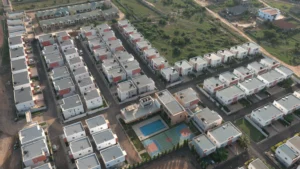
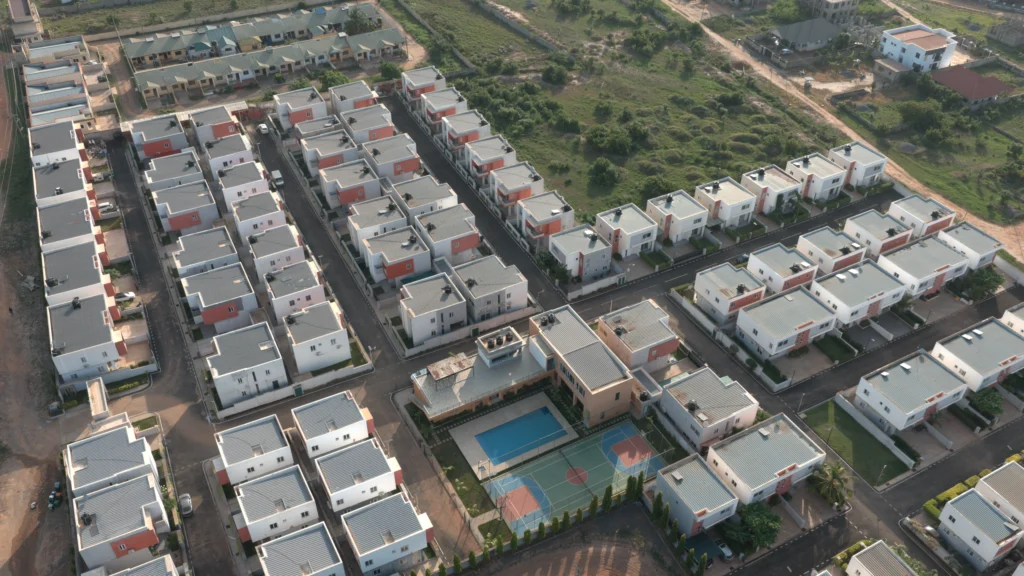
The Greens Estate is situated in this area and offers a gated residential environment with completed homes designed for modern family living.
The development includes amenities such as a swimming pool, gym, clubhouse, basketball court, children’s playground, and security features.
For buyers who value a residential community with shared recreational facilities, these features may be worth exploring.
Nevertheless, no single location is the best choice for everyone. Buyers should consider commute times, road conditions, access to essential services, the property’s total cost, and how well the location fits their daily lives.
If you are considering buying a house in Tema or the surrounding communities, visiting the area and inspecting the available homes can help you make a more informed decision.
What Should Real Estate Developers Do Differently?
If the industry wants more people to believe in homeownership, developers must recognise that buyers are looking for more than a building.
They are looking for value, transparency, quality, and confidence in the purchase process.
There are several ways the industry can respond.
1. Provide clear pricing. Buyers should understand the price of a property and the additional costs they may need to budget for.
2. Explain payment terms honestly. Developers should clearly communicate deposit requirements, instalment arrangements, financing options, and other applicable conditions.
3. Build homes that meet real needs. Housing options should reflect the needs of different households rather than focusing exclusively on luxury or prestige.
4. Make property information accessible. Prospective buyers should be able to obtain accurate information about the home, its features, location, and documentation.
5. Respect the buyer’s decision-making process. Purchasing a home is a significant financial commitment. Buyers need the opportunity to ask questions, compare options, and make informed decisions without unnecessary pressure.
These principles can help strengthen confidence between developers and the people they serve.
They also create an opportunity for responsible real estate companies to distinguish themselves in a competitive market.
Why The Greens Estate Deserves a Place in the Conversation
The discussion about affordability should not end with identifying what is wrong with Ghana’s housing market. It should also consider the options available to people who are actively looking for a home.
At The Greens Estate, the focus is on completed residential homes within a gated community in Community 25, Tema.
Rather than asking prospective homeowners to imagine what a development might eventually become, buyers can arrange a visit to explore the actual homes, examine their layouts, and experience the surrounding environment.
The estate offers different house configurations, giving buyers an opportunity to enquire about options that may suit their household size and preferences.
Its shared amenities include a swimming pool, gym, clubhouse, basketball court, and children’s playground. The community also incorporates security features designed to support a managed residential environment.
For buyers who value these features, The Greens Estate provides an opportunity to consider what a completed home within an established residential development can offer.
Importantly, every buyer has different financial circumstances. The Greens Estate may not be the right fit for every budget, and prospective homeowners should always assess affordability before making a commitment.
However, if you are searching for beautiful houses in Ghana for sale and want to explore completed homes in a gated community, The Greens Estate is worth adding to your shortlist.
The goal is not simply to sell you a house. It is to help you explore a home that makes sense for your plans, your household, and your future.
Is Homeownership in Ghana Still Possible?
The question of whether ordinary Ghanaians are being priced out of homeownership deserves serious attention.
High property prices, financing barriers, and concerns about value are real issues that cannot be solved by advertising alone. Addressing them requires better housing options, transparent transactions, realistic financial planning, and continued attention to what buyers actually need.
Yet, the challenges facing the housing market do not mean that prospective homeowners should abandon the idea of owning a home.
They mean that buyers need to be informed, developers need to understand their customers, and the industry needs to keep working towards a better homebuying experience.
If you are considering buying a house in Ghana, start by establishing your budget, researching locations, comparing properties, and asking the right questions.
And if you are ready to explore completed homes in a gated residential community, consider arranging a visit to The Greens Estate in Community 25, Tema.
You can see the available homes, discuss your requirements with the sales team, and find out whether any of the current options are suitable for you.
Homeownership should be an informed decision, not an impossible dream.
Explore The Greens Estate
Looking for a home in Ghana? Let us help you take the next step.
- Location: The Greens Estate, Community 25, Tema, Ghana
- Call: +233 54 010 2102
- Next step: Contact our sales team to confirm available homes, current prices, and purchase terms, or arrange a property tour.
The Greens Estate — Refined Living.