Buying a house is one of the biggest financial decisions you can make. Whether you are buying your first home in Ghana, purchasing property for your family, or investing from abroad, you want to be confident that your money is going towards a legitimate property.
Unfortunately, property fraud, disputed ownership, fake documents, and dishonest property dealings are risks buyers need to understand. A house may look beautiful in photographs, an agent may sound convincing, and the seller may promise a smooth transaction. However, appearances alone cannot prove that a property is safe to buy.
The good news is that there are practical steps you can take to protect yourself.
If you are searching for houses for sale in Ghana, here are 10 warning signs to look out for before committing your money.
1. The Seller Pressures You to Pay Immediately
One warning sign is a seller or agent who insists that you must make payment immediately or risk losing the property.
You may hear statements such as:
- “Another buyer is ready to pay today.”
- “Send the deposit now, and we will complete the paperwork later.”
- “You do not need to involve a lawyer.”
- “The price will increase if you do not pay today.”
Although genuine properties can attract multiple interested buyers, pressure should never replace proper checks.
What you should do: Take time to verify the seller, inspect the property, review the relevant documents, and obtain independent legal advice before paying. A legitimate opportunity should allow you to understand what you are purchasing.
2. The Seller Cannot Prove Ownership of the Property
Before buying a house in Ghana, establish who legally owns the property and whether the person selling it has the authority to complete the transaction.
Do not rely only on verbal assurances, business cards, social media profiles, or photographs of documents.
Ask for the relevant ownership documents and have a qualified property lawyer help you verify them. The checks required will depend on the type of property and the interest being transferred.
What you should do: Conduct the appropriate searches through the Lands Commission and investigate any inconsistencies before proceeding. The Ghana Police Service also advises prospective buyers not to rely solely on documents supplied by a seller when acquiring land.
3. The Property Documents Contain Inconsistent Information
Property documents should be examined carefully. Warning signs may include names that do not match, inconsistent property descriptions, unclear boundaries, or information that differs from official records.
A document may look official without proving that the seller has a valid right to transfer the property.
Depending on the transaction, relevant documents may include a land title certificate, an indenture, a site plan, a lease, or other records establishing the seller’s interest.
What you should do: Have a qualified property lawyer review the documents and arrange the necessary searches. Do not assume that a photocopy or a document bearing an official-looking stamp is genuine.
4. The Seller Refuses an Independent Property Search
A seller may tell you that conducting a property search is unnecessary because they have already completed all the paperwork.
That assurance is not a substitute for independent verification.
A search through the appropriate Lands Commission processes can help establish what the official records show about the property. It may reveal information relevant to ownership, registered interests, or potential complications.
However, a search result should be considered alongside other necessary investigations rather than treated as an absolute guarantee that no dispute exists.
What you should do: Arrange your own checks before making a substantial payment. If the seller discourages reasonable verification, pause the transaction until your concerns have been addressed.
5. The Property Is Much Cheaper Than Comparable Homes
Everyone wants value for money. However, an unusually low price deserves careful investigation.
A property advertised at a significantly lower price than similar homes might have a legitimate explanation. The seller may need to sell quickly, the property may require repairs, or the location and facilities may differ.
In other cases, a low price may be used to attract buyers into a fraudulent transaction.
What you should do: Compare similar properties in the same area, ask why the price differs, inspect the actual home, and verify the seller’s authority.
When searching for cheap houses for sale in Ghana, remember that affordability matters, but so do ownership, construction quality, location, and the terms of the sale.
The objective is not simply to find the lowest price. It is to find a property you can confidently purchase.
6. You Are Asked to Pay Into an Unverified Personal Account
Payment arrangements deserve the same attention as property documents.
Be cautious if an agent asks you to send a deposit to a personal bank account or mobile money number without providing a clear explanation of their authority to receive the money.
A personal account is not automatically evidence of fraud, but you should verify the recipient’s identity, authority, and relationship to the transaction.
What you should do:
- Confirm the correct recipient independently.
- Obtain written payment instructions.
- Use a traceable payment method.
- Request an official receipt identifying the property and amount paid.
- Have your lawyer review the payment arrangements where appropriate.
Never transfer a large amount simply because someone has sent you a payment number through WhatsApp.
7. You Are Not Allowed to Inspect the Actual Property
Photographs, videos, virtual tours, and promotional materials can help you discover a property. They cannot replace appropriate verification of the actual home.
Be cautious if the seller repeatedly postpones inspections, refuses to show the specific property being sold, or cannot explain its location.
A beautiful house in an online advertisement may not accurately represent the property you will eventually receive.
What you should do: Arrange a physical inspection before committing to the purchase. Check the property’s condition, location, access roads, utilities, drainage, and surrounding environment.
If you are buying from abroad, appoint an independent and trustworthy representative to inspect the property on your behalf. Do not rely exclusively on a person selected by the seller.
8. The Agent’s Credentials Cannot Be Verified
A professional appearance or a large social media following does not establish that someone is authorised to provide real estate agency services.
Ghana’s Real Estate Agency Council (REAC) maintains a public registry through which members of the public can check licensed real estate practitioners and agencies.
What you should do: Before engaging an agent or agency, use the official REAC registry to check their credentials.
You can begin your verification through the Real Estate Agency Council’s Public Registry:
https://reac.gov.gh/public-registry-search/
If you are dealing directly with a property developer, verify the company and the authority of the person handling the transaction. Do not assume that an agent’s credentials alone establish ownership of the property being offered.
9. You Are Told to Sign the Agreement Without Reading It
A property agreement can contain important details about the price, payment schedule, property description, completion obligations, and the responsibilities of the buyer and seller.
Signing without understanding these terms can create avoidable problems later.
Be particularly careful if you are asked to sign blank documents, accept verbal promises that are missing from the agreement, or proceed without receiving a copy.
What you should do: Ask an independent property lawyer to review the agreement before you sign.
Make sure you understand:
- The exact property being purchased.
- The total purchase price and payment arrangements.
- What is included in the sale.
- The obligations of each party.
- The expected completion or handover arrangements.
- The process for addressing delays, disagreements, or breaches of the agreement.
Do not rely on verbal assurances when an important promise should be documented in the contract.
10. The Seller Makes Promises That Cannot Be Verified
A property advertisement may promise excellent facilities, secure surroundings, reliable utilities, or a convenient location.
However, buyers should confirm which features actually exist and which are planned for the future.
Be cautious about unsupported claims regarding guaranteed investment returns, future property values, construction completion dates, or facilities that you cannot verify.
What you should do: Visit the property, inspect the facilities, request written clarification of important promises, and confirm the terms of the transaction before paying.
If you are buying a home in a residential estate, ask which amenities are currently available, how the community is managed, what security arrangements exist, and whether any additional fees apply.
A responsible purchasing decision should be based on verifiable information rather than promises alone.
A Property Buyer’s Safety Checklist
Before buying a house in Ghana, work through this checklist:
☐ Inspect the actual property.
☐ Confirm the identity of the seller and their authority to sell.
☐ Obtain and independently verify the relevant ownership documents.
☐ Conduct the appropriate Lands Commission searches.
☐ Investigate inconsistencies, disputes, or other concerns.
☐ Compare the asking price with similar properties.
☐ Confirm payment instructions and keep records of every transaction.
☐ Have an independent property lawyer review the agreement.
☐ Obtain receipts and keep copies of signed documents.
☐ Ensure the transaction is properly completed and take the necessary steps to register the interest acquired.
These checks do not eliminate every possible risk, but they can help you identify problems before they become expensive disputes.
What If You Are Buying a House in Ghana From Abroad?
Buying property while living in the United States, the United Kingdom, Canada, or elsewhere presents additional challenges.
You may not be able to inspect the property yourself, meet the seller, or follow the transaction closely.
If you are part of the Ghanaian diaspora and considering buying a home, take these additional precautions:
Use independent representation. Choose a qualified lawyer and, where necessary, a trusted person who can inspect the property and verify information on your behalf.
Verify documents independently. Do not accept a seller’s assurance that the paperwork is genuine. Arrange the appropriate checks through the relevant institutions.
Keep a clear record of payments. Ensure that every payment has a documented purpose, an identifiable recipient, and an appropriate receipt.
Understand the purchase agreement. Have a lawyer explain your obligations, the seller’s obligations, and the process for completing the transaction.
Do not rush because of a promotion or deadline. Whether you are visiting Ghana for the holidays or planning to settle permanently, give yourself enough time to carry out the necessary checks.
Buying a home from abroad can be manageable, but distance should never be a reason to skip due diligence.
Why Trust and Transparency Matter When Buying a House
Buying a house is about more than the building itself. It involves your savings, your family’s future, and your confidence in the people handling the transaction.
That is why prospective buyers should look for clear communication, verifiable information, proper documentation, and a willingness to answer reasonable questions.
If you are considering a completed home in a residential estate, take time to visit the property, examine its features, understand the purchase terms, and obtain independent legal advice before making a commitment.
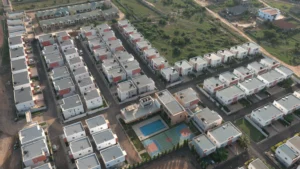
At The Greens Estate, prospective homeowners can explore completed homes in Community 25, Tema, and learn more about the residential community and its facilities.
Whether you are buying your first home or searching for a property for your family, make informed decisions and ask questions before you pay.
Interested in exploring homes at The Greens Estate?
Contact the sales team on +233 54-010-2102 to enquire about current property availability, pricing, purchase terms, or to arrange a property tour.
The Greens Estate — Refined Living.
Disclaimer: This article provides general educational information and is not a substitute for independent legal advice. Property transactions differ, and buyers should consult a qualified Ghanaian property lawyer and the relevant authorities before committing funds.